Closing the Post-Consultation Gap: Why Patients Forget, and How Digital Health Can Bridge the Divide | Care Beyond Clinic - Slincas
Healthcare
Closing the Post-Consultation Gap: Why Patients Forget, and How Digital Health Can Bridge the Divide
Sl
Posted by
Slincas Team
Posted onJanuary 7, 2026
5 min read
Imagine leaving your doctor’s office feeling reassured — only to realize hours later that you can’t quite remember what the doctor said. You’re not alone.
Studies show that 60–80% of medical information is forgotten almost immediately after a consultation, and nearly half of what patients do remember is incorrect. This isn’t just a memory issue. It’s a critical weakness in the way healthcare is delivered.
When patients forget, misunderstand, or lose access to care instructions, the impact is felt everywhere:
Adherence drops → Non-adherence costs the U.S. healthcare system USD 300 billion annually.
Readmissions rise → Patients discharged without clear instructions are up to 50% more likely to be readmitted within 30 days.
Clinician burnout grows → Providers spend valuable time repeating instructions or fielding avoidable calls.
This “post-consultation gap” is a silent but global problem.
A Global Challenge With Local Faces
While the issue is universal, each country experiences it differently:
Singapore → A study at Singapore General Hospital found 60% of older patients did not take their medications as prescribed, often due to confusion or forgetfulness. (research article titled “Prevalence and predictors of medication non-adherence among older community-dwelling people with chronic disease in Singapore” (Chew et al., 2021))
India → The patient engagement market is booming, expected to grow from USD 809M in 2024 to over USD 3B by 2030. Yet awareness of national health platforms is uneven — only 35% of patients surveyed knew about Ayushman Bharat Health Account (ABHA IDs).
China → Adoption is high: 67% of people track their health digitally, and 94% of clinicians use digital health tools. Still, patients report difficulty with clear follow-up guidance.
UK → Less than half of patients understand written medicine instructions, and 40% leave GP visits without raising all concerns.
Australia → Medication non-adherence is common: 40% of chronic disease patients skip or mistime doses, and nearly 40% are non-adherent within a month of hospital discharge.
Across borders, the details differ — but the theme is the same: patients leave the clinic without the clarity or confidence they need to manage their health.
The Human Side of Forgetting
Behind the numbers are human stories:
A newly diagnosed patient feeling overwhelmed.
A caregiver missing a crucial instruction for an elderly patient.
A busy professional forgetting when to take the next dose.
Healthcare doesn’t end at the clinic door — but too often, support does.
Why Existing Systems Aren’t Enough
Most clinics try to close the gap with written discharge notes, patient portals, or follow-up calls. But the reality is sobering:
Only 10–30% of patients regularly use portals.
Discharge notes are often filled with jargon.
Phone follow-ups don’t scale with growing patient volumes.
Clinics recognize the problem. Staff, however, are already stretched thin.
Our Research: What Patients Are Telling Us
To dig deeper, we conducted our own survey with nearly 90 patients across Singapore, India, USA, Australia and other regions. Their voices tell a powerful story:
Follow-up is the norm → Most patients said they do have follow-up questions after leaving care.
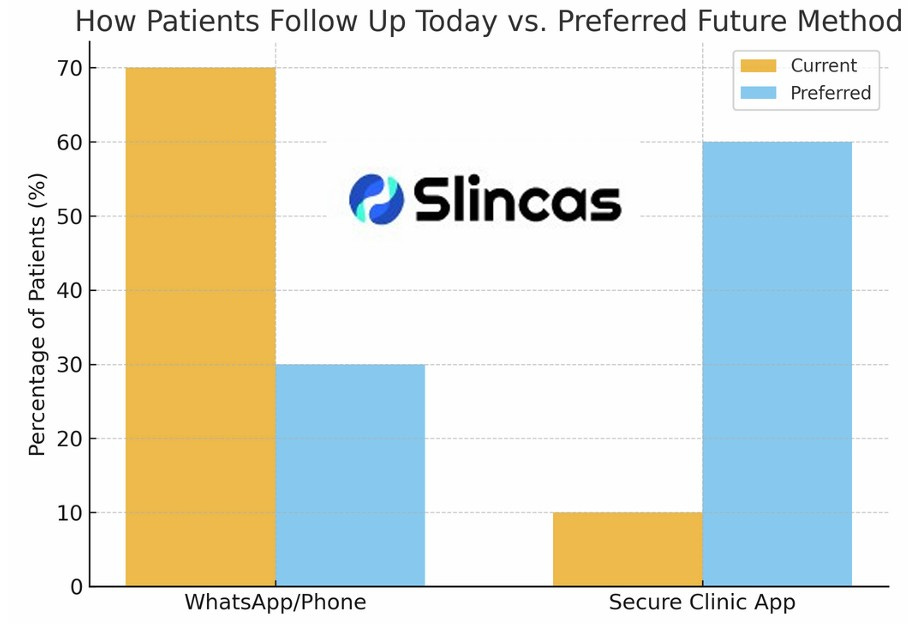
WhatsApp dominates — but feels wrong → Patients rely on WhatsApp/SMS or calls today. Yet over 60% would prefer a secure, clinic-branded(White labelled) app instead.
Structured messaging builds loyalty → More than 70% said clear, structured communication would make them more likely to return to the same facility.
Professionalism matters → Around half of patients feel WhatsApp is “too personal or unprofessional” for healthcare.
Team-based care is acceptable → Many patients are open to having nurses or staff — not only doctors — handle their follow-up questions.
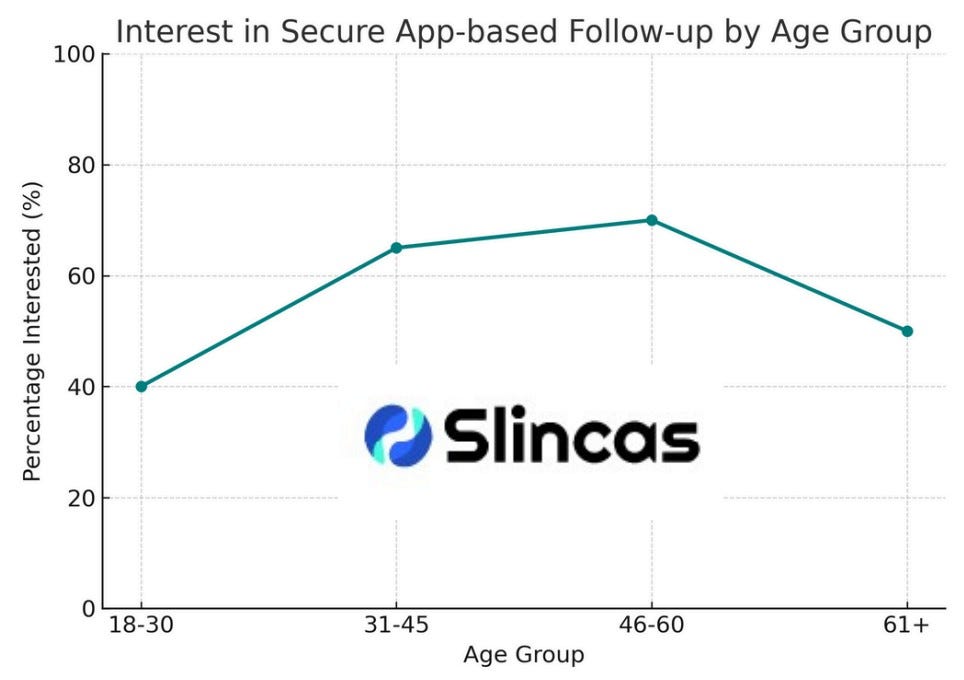
Demographics matter → Middle-aged respondents (31–60), especially in Singapore, were the most vocal about wanting secure, app-based follow-up.
This confirms what global studies show — and adds something vital: patients themselves are asking for digital-first, professional, and supportive ways to bridge the gap.
Bridging the Gap With Digital Health
At Slincas Technologies, we believe the solution lies in AI-powered communication that empowers patients and supports clinicians.
Our approach focuses on three pillars:
Clear instructions → Accessible, jargon-free summaries patients can revisit anytime.
Secure chat → AI-supported messaging that lets patients ask questions without overwhelming providers.
Operational support → Smart tools for staffing and scheduling, so clinicians spend more time on care and less on logistics.
This isn’t about replacing the human touch. It’s about extending it beyond the consultation room.
Why It Matters
Stronger post-consultation support drives measurable outcomes:
Clinician productivity → Less duplication, less burnout.
Patient trust and loyalty → Clear communication builds confidence, keeping patients connected to their providers.
Digital health is no longer about digitizing records. It’s about reimagining the patient journey — and making care continuous, connected, and compassionate.
A Call to Action
Healthcare systems everywhere are stretched. Patients are more empowered, yet more overwhelmed than ever. Clinicians are more skilled, yet more burned out than ever.
Closing the post-consultation gap is not optional. It’s essential.
At Slincas, we’re building the bridge patients and providers need — so no one feels lost once they leave the clinic.